Thursday, 26 March 2015

Pegasus Agriculture Reviews Why Middle East Is A Good Market For Hydroponic Veggies

hydroponic_advance_goes_commercial_2_634704503829524000MENA region’s largest owner and operators of hydroponic farming facilities- Pegasus Agriculture combines nature’s best with cutting-edge technical knowledge to grow food that are healthy, fresh and organic. As the industry leader in managing hydroponic farming facilities in the MENA region, Pegasus Agriculture cultivate and market premium quality, greenhouse-grown fresh produce locally in the region successfully.

According to Pegasus Agriculture, hydroponically harvested plants are easy to sell, mainly because of their reliable year-round output, mostly in climate-controlled hydroponics facilities. The ability of hydroponic farms to produce in-demand, non-native vegetables is also a major factor for the increased demand.
With hydroponics, nutrients are delivered directly to the plants’ roots. The plants’ energy can be redirected to growing lush foliage and abundant fruits, since they no longer need to search for food.


Constant supply of fresh vegetables is considered to be crucial for green market consumers, either for commercial or residential purposes, as they have a constant demand. Growers may be able to assure their consumers of a constant price or small fluctuation in price due to variation in production factors.

Producing veggies, especially leafy ones without soil and inside a controlled environment helps growers to produce clean product with beautiful color and leaf shape. The appearance of green products greatly accounts for good market price and high profit.

Hydroponics has numerous advantages, since it offers complete control over growing conditions. It also requires less space compared to conventional agriculture, and pests and other blights can be more easily controlled and prevented.

The most convincing reason for embracing hydroponics in the MENA region is its water efficiency. For instance; when growing lettuce in hydroponics, the grower will be saving around 90 per cent as the water is recycled. With tomatoes, you can save between 40 and 60 per cent.
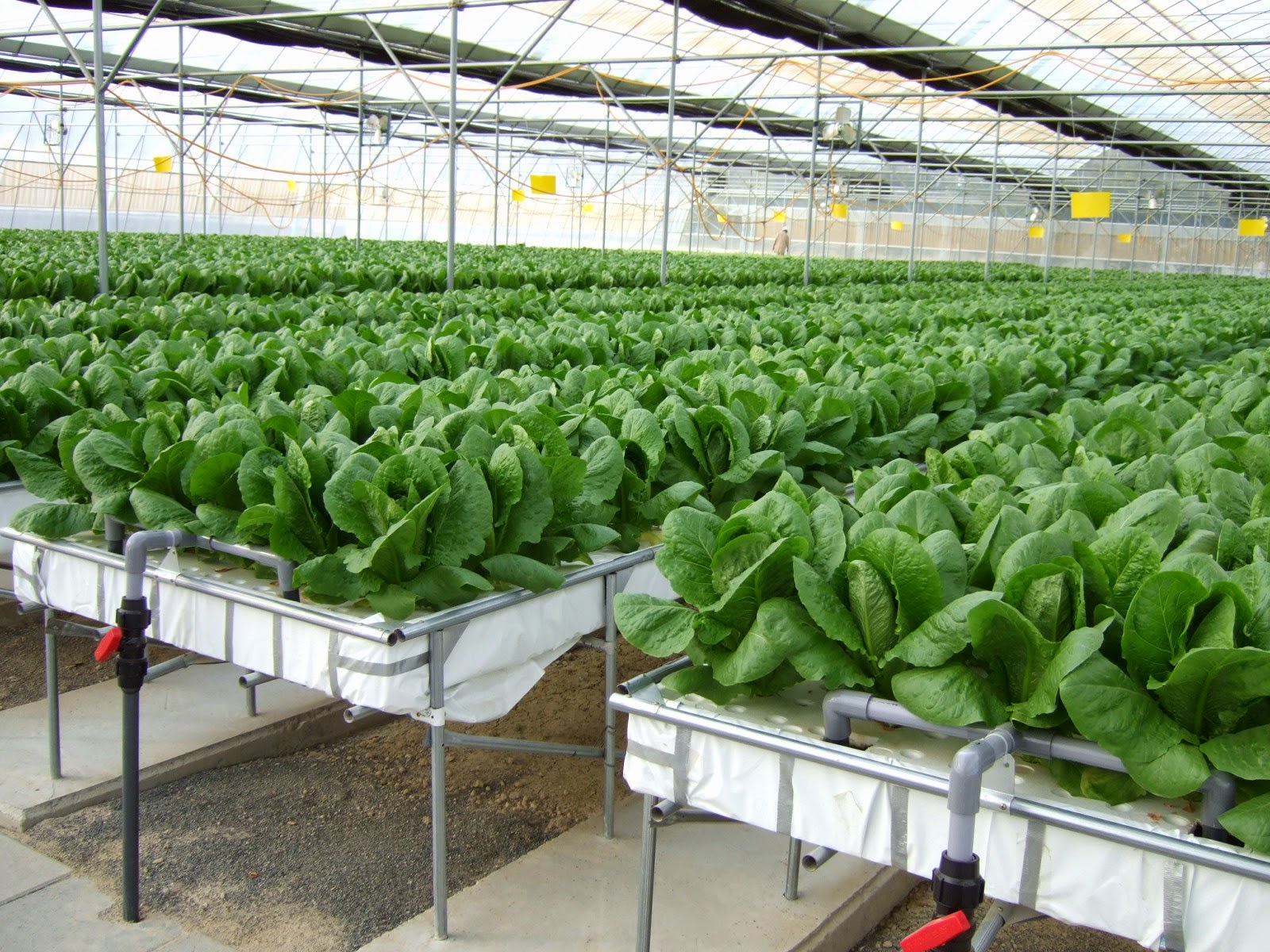
Hydroponics Cultivation ConsultancyAnother factor that makes hydroponic veggies easy to sell is that they can be grown close to the market distributor, says Pegasus Agriculture. As a perishable product, long distance transportation may damage and lower market value of the product. Moreover, having the product located near the consumer can considerably reduce transportation and other related cost.

Pegasus Agriculture’s cutting edge hydroponic farms will not only supply the major supermarkets, but also the local domestic markets with very high demand for hydroponic veggies. The company has its own advanced hydroponic facilities to grow a large variety of flowers, vegetables, and herbs hydroponically.

Monday, 16 March 2015

Commercial Hydroponics- A Viable Solution For Mena Regions’ Food Shortage Issue

hydroponic-farming-projectsFood security is a significant concern for governments in MENA region, which is already heavily dependent on food imports. While agricultural productivity for the region as a whole increased markedly during the 1990s due to modernization efforts with water management, the region still faces a food deficit of 50-90 million tons by 2020.

Hydroponics offers some potential to reduce food security risks of the region and almost all the MENA countries are now exploring the potential of”—soil-free agriculture and vertical farming—in order to be self-sufficient in food production by 2023.There is rapid growth in Global Food Market and it is time that nations become self-sufficient in its agriculture production. Modern agriculture occupies far more than the 10.6 percent of global land that is arable.

In Saudi Arabia, arable land is very limited; therefore, it is highly challenging for it to produce adequate food. Saudi Arabia imports 95% of their fresh fruits and vegetables for which the nation is paying massive premiums, as a consequence burdening its economy. Most of the MENA countries suffer from a lack of arable land and climate that are unsuitable for the mass production of food.

For the countries where natural resources are a question in supporting agricultural growth, commercialization of hydroponic farming is the viable answer. The hydroponic technique is highly sustainable; a onetime infrastructure investment can bring 100 years of returns. The growth of high yield crops means, returns on investments are made quickly.

We can confidently assure that hydroponic farming is a win - win situation for all as with 80% less water usage and efficient utilization of land. Hydroponics is one of the many choices; but the most sustainable one for a viable and greener agriculture for the MENA region.

Wednesday, 11 March 2015

Hydroponics to Boost Sustainable Farming for a Greener Future

a-frame-pegasus-agricultureSustainable agriculture is the act of farming using principles of ecology; sustainability involves making better use of the knowledge and skills of farmers, so improving their self-reliance.

Hydroponic systems are now widely used in commercial greenhouses. It is a system of agriculture that utilizes nutrient-laden water rather than soil for plant nourishment. Because it does not require natural precipitation or fertile land in order to be effective, it presents people who are living in arid regions with a means to grow food for them and for profit. In addition, the technique can be used in roof top farming and therefore is very useful in areas with limited space such as urban areas.

The re-use of nutrient water supplies limits excessive plant growth due to overabundant nutrients and general pollution of land and water unlikely, since runoff in weather-independent facilities is not a concern. Hydroponic systems do not require pesticides, require less water and space than traditional agricultural. Self-sustaining city-based food systems mean a reduced strain on distant farms, the reduction of habitat intrusions, fewer food miles, and fewer carbon emissions.

There are countries, especially in the Arabian Peninsula where agricultural activities are limited to around 1% of land. Farmers here have to contend with extremely scarce water supplies and poor soils at the same time maximizing productivity per unit area is paramount. The implementation of promising technologies is vital in such regions to deal with the physical constraints, enhance agricultural productivity and rural livelihoods.

hydroponic-lettuceSoilless production through the use of hydroponic farming methods remains the best solution for raising the water productivity and sustaining agricultural production in these countries. They have successfully implemented the techniques of aquaponics or hydroponics, in order to meet their increasing food demands, in a sustainable way.

A more sustainable agriculture seeks to make the best use of nature’s goods and services as functional inputs. It does this by paying attention to regenerative processes, such as nutrient cycling and soil regeneration. It may also use the natural enemies of pests rather than using chemical controls in the food production processes so it minimizes the use of non-renewable inputs (pesticides and fertilizers) that damage the environment or harm the health of farmers and consumers.

Tuesday, 24 February 2015

Grow Strawberries Year Around Via Hydroponic Method

Are you waiting for the summer to grow your strawberries? Well, you don’t need to wait for any particular season to produce strawberries or any of your desired fruits, if you opt for hydroponic method of growing herbs, fruits or vegetables.

why-home-owners-should-embrace-indoor-hydroponic-gardening-1-638
There’re several benefits of growing fruits via hydroponic procedure, particularly your much-loved strawberries. End of summer never means you can’t grow your favourite strawberries anymore. Hydroponic method of cultivation is designed in such a manner that it enables farming all through the year, despite any climate conditions.

You will also like the fact that hydroponic strawberries can be produced employing much less space and much less time as well. Strawberries grown through hydroponic method grow quicker than the ones produced in soil.

Also, growing strawberries hydroponically will save you from the dilemma of parasites or weeds. Nonexistence of soil in hydroponic procedure of growing will aid you get rid of several other pests & aliments that outbreak plants cultivated in soil, and assist you ignore the expenditure to buy fertilizers needed for the same.

Strawberries can be produced this way by establishing your preference of hydroponics systems; and there’re multiple choices accessible in the market to pick the one that fits you wonderfully. Moreover, you will have complete control, over nutrition, heat, humidity and light supplied to your hydroponic fruits in this growing procedure.

If you are planning to produce strawberries indoors or inside a greenhouse, the biggest advantage would be that you’ll require no time to fight the ever-persistent birds or squirrels that like strawberries, possibly as much as you do. In fact, you cannot blame any living creature for getting enticed to hydroponic strawberries, as they are undoubtedly more wholesome and delicious compared to their soil-grown counterparts.

UrbanFarm
If you are en environment-friendly cultivator, growing strawberries hydroponically will be an intelligent selection to make, as supplements employed in hydroponic practice can be recycled. Furthermore, hydroponic growing option offers you the chance of not contaminating land with manures filled with chemicals.

You can make a straightforward selection of producing hydroponic strawberries just anywhere you love – whether it is rooftop, garden, corridor or your living room. Now you’re all set ready to enjoy as many strawberries as you wish throughout the year. It won’t be a bad idea if you want to start a small business of selling strawberries to the retailers. 

Monday, 16 February 2015

Use Clay Pebbles in Indoor Gardening

Clay pebbles are a great growing medium generally employed in flood & drain or hydroponic growing systems. There’re a range of online resources that can demonstrate you how to develop your own system, or you can buy a readymade system at a hydroponics shop. In this post, you will be guided through the procedure of employing clay pebbles as a growing medium in a flood & drain hydroponic system.

imagesA flood & drain hydroponic system consists of 2 levels: a planting pot and a container. Water is pumped out from the tank to the planting container and after that drained back into the tank to be circulated again. Generally, the system is handled by connecting the water-pump to a timer so that water could be pumped through the system at fixed intervals all through the day.

How to utilize clay pebbles:

Once your hydroponic system is ready, employing the clay pebbles is rather simple:

• Wash extended clay pebbles to take away excessive dirt & debris

• Fill up plant pot with clay stones

• Spread seeds over clay stones directly or remove seeding into the system.

• Fill up the tank with a supplement rich solution following the product’s condition. Vacant your tank and fill it again with fresh nutrient solution roughly every 2 weeks. You might have to fill again your tank more frequently relying on your plants’ nutrient use.

• Fix your timer to submerge your plant pot twice a day. If your hydroponic system is employing a mixture of clay stones and another kind of growing media, you need to adjust the occurrence of flooding as few materials retain water more promptly than clay.

Last but not the least; ensure your water drains out before arriving at the upper surface your clay stones as this can stimulate algae growth and can cause problems with plant growth.

Monday, 9 February 2015

Three Indications of Plant Nutrient Insufficiency

Much the same as any living thing, plants require nourishment to exist. Plants get nourishment via their root system from a range of supplements that occurs naturally in the planet. At the point when plants aren’t grown in soil, but instead in a hydroponic supplement solution, it’s dependent upon the producer to make sure that the appropriate amount of supplements are being nourished to the plants.

UrbanFarm3of the basic supplements that are needed for plant growth are potassium, phosphorus and nitrogen. If any of these nutrients are short in supply, you’ll start to certain indications of plant nutrient deficit.
Here are ways to identify the indications of plant nutrient insufficiency relating to each kind of nutrient:

Phosphorus deficiency:

Phosphorus aids the plant fortifying its roots & seeds thus guiding to an overall wholesome reproduction. In case of a Phosphorus insufficiency, you are going to perceive a darkening of the leaves.

Nitrogen deficiency:

Nitrogen kicks of photosynthesis and without it your plants’ leaves will get to be stained either yellow or brown. This is known as chlorosis and is the consequence of an absence of chlorophyll creation. The plant itself will possibly not keep on growing or will grow slowly.

Potassium deficiency:

06072009334-627x299
Potassium is eventually in charge of growth & health, and aids the immune system of the plant. In the event that the leaves have started to stain at the edges or the plant is not blooming how it ought to, then this’s likely an indication of a potassium insufficiency.

These days you can easily avail hydroponic fertilizer online or from your local hydroponic store that can help you with your certain deficiency of plants. With all such facilities available, now you can easily grow your favorite plant on your own backyard and maintain their health all through the year.

Wednesday, 4 February 2015

How to Measure pH Level in Hydroponic

It is essential to be routinely measuring pH level of your nutrition solution, if you wish to accomplish the best growth in your hydroponic garden. This could be accomplished with pH analyzers and adjustment to pH levels can be made likewise.

What’s pH?

imagesDespite the fact that the precise meaning is unidentified, it is thought that pH stands for “power of Hydrogen." PH is the amount of the acidity or alkalinity level in a water solution. It is evaluated on a scale from one to fourteen where the lower half of the scale is acidic, but the upper half is alkaline. A preferably pure solution should be 7 on the pH scale.

What does pH stand for in hydroponic?

This pH level is perfect for the absorption of vital micro & macro supplements by the plant roots. A higher vicinity of macro supplements such as potassium, phosphorus and nitrogen is found inside this range signifying the plants are developing in an ideal condition.

Measuring pH levels in hydroponic:

At the point when first beginning with your hydroponic garden, you will wish to confirm the pH level of your supplement solution regularly. You will likely need to carry on this until you build up an understanding of your system and plant requirements.

Adjusting pH levels:

While measuring pH levels it is likely you’ll require to fine tune somehow. There’re products accessible at your hydroponics retail shop or online, which are designed specifically to lower or increase your pH level. Cultivators can also lower their pH level themselves by employing citric acid.

Employ a pH tester:

As an amateur, it is simpler to go with the traditional procedure of testing pH levels by employing plain paper strips. These strips are covered in special coloring that when dunked into the solution will specify a color. You then contrast that color to a pH color graph which lets you know which pH level your nutrient solution is at.

If you wish to propel your hydroponic aptitudes past the novice level, you can start employing a fluid pH testing unit. This’s where you put dye into the solution which transforms color to display the pH level. These fluid pH testing units can be accessible easily at your neighboring local hydroponic store or online.

The most precise means to verify your pH levels is by employing a digital pH meter. You can easily find these digital meters online.
Google+